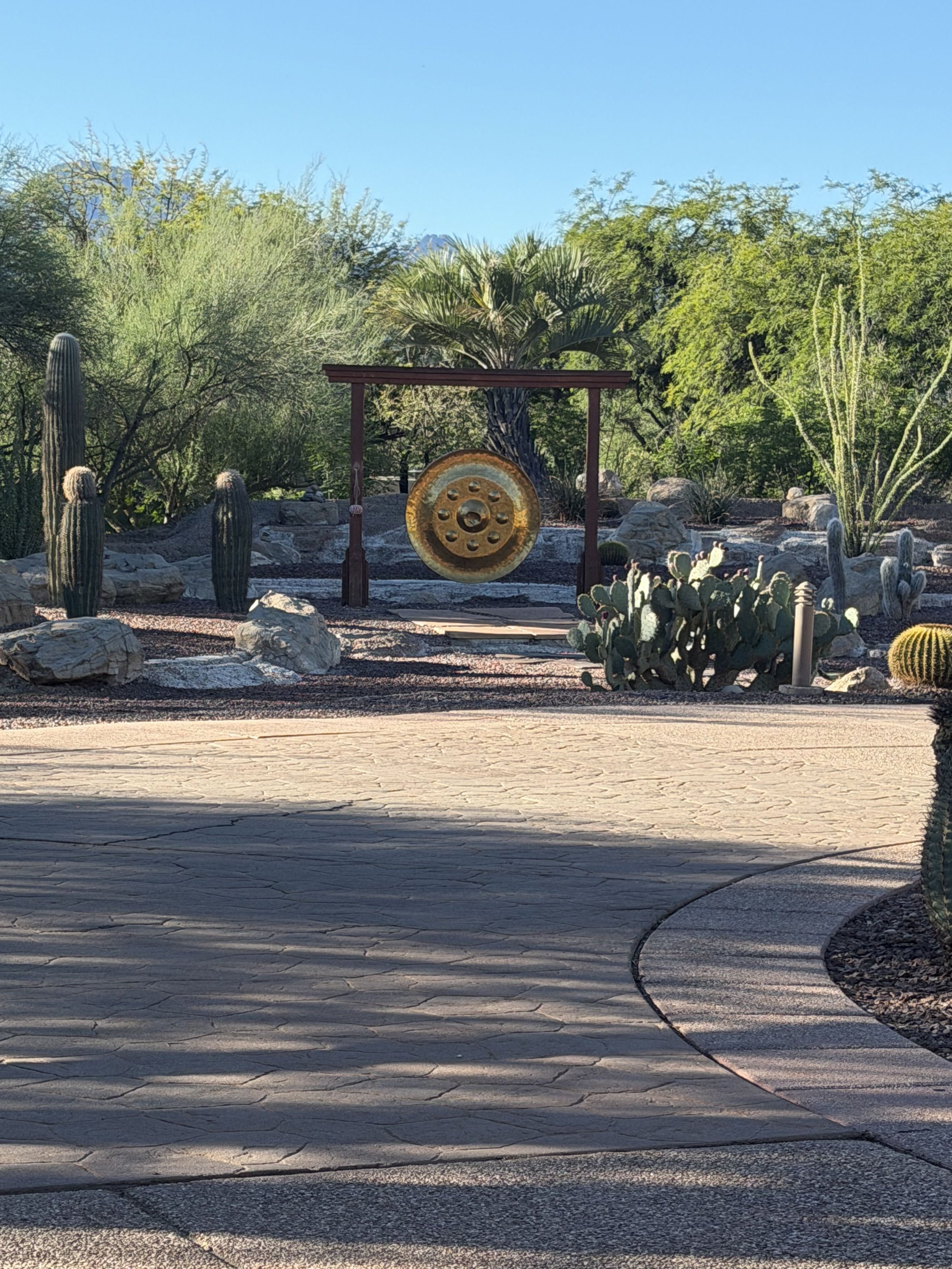
What are you waiting for?
A revenue threshold? A target weight? Your dream relationship? That vacation, or the thing you keep putting off?
Have you heard of the “arrival fallacy,” a term popularized by positive psychology expert Tal Ben-Shahar? It’s the notion that reaching a particular goal or achievement will bring lasting happiness or fulfillment.
As I’ve been thinking about worthiness, I’ve wondered whether we sometimes add another expectation: once we get there, we’ll finally feel deserving, too.
The truth is that we are all waiting for something to occur or unfold in the future. So the act of waiting isn’t itself the issue, but where it gets tricky is in how we wait.
As you wait on and for what you want, are you:
externalizing your self-worth,
using a future goal to avoid discomfort in the present,
spinning the ‘almost there’ wheel, or
comparing your timeline to what you see others experiencing?
If I’m being honest, I’ve definitely found myself doing one or all of the above at one time or another.
I’m sure some of it stems from being an over-achieving only child. Still today, I’m always challenging myself to exceed the goals I set for myself and my business. Add to that an obsession with the process of how things get done.
And yes, there have been times when I’ve worked myself to the point of mental and physical exhaustion. If you read Week 1, you’ll remember that I arrived at the retreat sick and depleted. That experience — and the questions it prompted — is where this series began.
Yet, as I’ve been working on this month’s series about one’s feeling of worthiness, what’s coming into sharper focus is the idea that business success and financial security aren’t the whole picture if a person can’t also experience the life they intended that success and security to support.
So how intentional are you about making time to:
rest before you’re depleted
take proactive care of your mental, physical, and emotional health
nourish your close relationships — romantic and otherwise
do things that bring you joy
build community, while honoring your boundaries
experience spaciousness on purpose (not because a meeting got canceled)
make deliberate choices…and change your mind
Here’s the question this month’s writing — and my own experience and observations — has brought me to:
What if part of the obstacle is a rule — you know, the one that sounds like some version of, “I’ll let myself have this once I’ve earned it”?
What parts of that life could you give yourself permission to experience now, even before everything you’re working toward arrives?
I don’t ask that question from a place of judgment or to be harsh. I ask it from a place of compassion. Because you and I deserve to feel worthy before any measure of success — however we define it — ever shows up!
Three weeks. Three threads.
Business: strategy — and permission.
Money: information, not a verdict.
Life: permission to begin before you arrive.
Here’s what I hope you’ll carry with you from this series: the “work” is not to become worthy enough for success.
The work is to stop treating success as the evidence that you are worthy. That’s already been decided — you are!
Building your capacity to receive doesn’t have to mean waiting until you feel ready for the whole life you want. It can begin with making room for some of it now: rest, connection, joy, support.
Not because you’ve finally earned it. Because your life is already happening.
Not a small task, but certainly a worthy (pun intended) one.
P.S. Business, money, life. Three weeks, one question: what are you waiting for in order to feel worthy? Send me a DM on Instagram and tell. A word or short sentence is plenty.
And if it’s relevant, we work on this in Successful, Profitable…and Not Broke, alongside the business and money pieces.
About Jacquette

I love to ask questions and spark aha moments. I love to talk about why success with money is about more than just the numbers, and how the cultural impact on the intersection of money, business, and life matters–A LOT! And, I really hope I help people feel seen, heard, and not judged—especially since money is emotional and personal.