How Many Times Did You Courageously Ask For Something Today? What Happened?
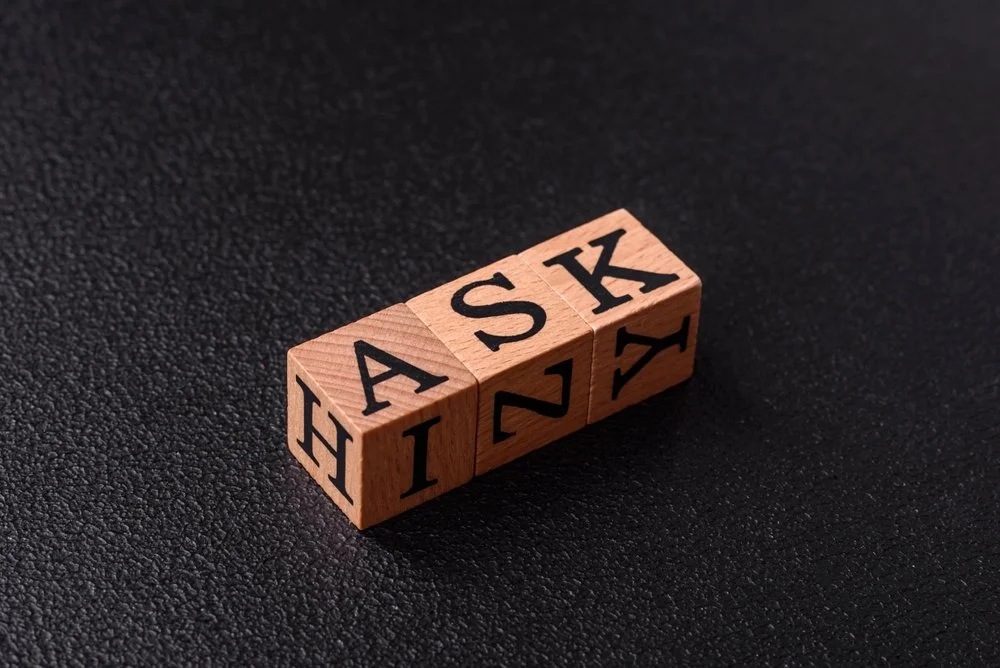
How many times did you courageously ask for something today — maybe for a favor, for help, or for something you wanted from someone else?
On the surface “ask” is just a three-letter word.
And yet the act of asking can generate so much anxiety for some people. I know this is sometimes true for me. What about you?
We vacillate between “should we” vs. “shouldn’t we?”
Or, we spend more time than necessary wondering what will the other person think of us based on what we’ve asked for.
What I find interesting is that we actually ask for many things throughout the day, everyday — hence, the title for today’s piece.
The larger question is what exactly are you asking for — and how much courage does it require of you.
This matters because what influences your relationship to the act of asking depends on the meaning you’ve attached to the ask and to whom the ask is targeted.
This matters because it impacts the degree to which you ask:
Clearly
Directly, and
Without over-explaining, or pre-defending
It also affects the extent to which you ask from a position of scarcity (think: hedging, apologetic, not confident) or abundance (think: grounded, specific, open to dialogue).
Asking: How’d You Do It?
When you think about it, you and I have been asking since we were babies, before we even had verbal skills. But once we “learned how to use our words,” what we were taught influences us still — today.
Think about the messages you absorbed growing up:
Don’t ask, it’s rude.
Be grateful for what you have.
Wait your turn.
Stop being so demanding.
Who do you think you are?
Money doesn’t grow on trees.
We don’t talk about money.
What happens in this house stays in this house.
Some of these were said directly to you.
Others were modeled — from watching the adults around you who never asked for the raise, never sent the dish back, never questioned the bill, never ruffled any feathers, never named what they wanted out loud (or at least not in your presence).
And then there’s the cultural layer sitting on top of the familial one.
Depending on who you are and where you come from, you have learned that asking is unbecoming, ungrateful, aggressive, or unsafe. Or that asking is fine — but only for certain things, certain people, in certain ways.
So by the time you’re an adult negotiating a contract, quoting a price, or telling a partner what you need, you’re not just asking. You’re asking through every message you ever received about whether asking is allowed, who gets to do it, and what it costs to do it “wrong.”
This is why I like to think of “asking” as a practice and not a performance.
A performance is something you put on. It’s tied to whether you’re being watched, whether you’re getting it “right,” and whether you’re earning approval for how you did it. Performance is rehearsed for an audience.
And here’s the cost: when asking is a performance, you only ask when you’re sure you’ll get the applause. You shy away from asking for the things that might get a “no” — which are often the very things that would change your life.
A practice is something you build. It’s tied to repetition, refinement, and a willingness to be imperfect along the way.
Practice is for you.
Most of us are performing the ask when we think we’re making it. We’re managing how we’ll be perceived, anticipating the other person’s reaction, softening our voice so we don’t come across as too much. The ask itself becomes secondary to how the ask looks.
But when asking becomes a practice, something shifts. You’re no longer auditioning for the yes. You’re naming what you want — clearly, directly, without over-explaining or pre-defending — and letting the other person respond.
What Happened Next?
Yes, it’s true: sometimes the “asking” is an internal exercise because the person you’re “asking” is yourself. Asking yourself if you can really afford this. Asking yourself if it’s okay to rest. Asking yourself if you’re allowed to want what you want.
But I suspect that 99% of the things you’re asking for throughout the day involve other people. This is why…
It is often hard to ask without apology — in advance.
The waiting space (remember last week) can feel excruciating.
A binary “yes” or “no” of whether you got what you asked for matters — and can be tricky. If you got a “yes,” does that always equal success? Does a “no” always mean failure or defeat?
A “yes” can feel like vindication — or it can put you on the hook for something you didn’t want as much as you thought. A “no” can feel like rejection — or it can be redirection, information, or even protection.
The point isn’t to manage the outcome. The point is to ask anyway.
Because the more you practice asking — courageously, clearly, without dressing it up or shrinking it down — the more you learn that the outcome was never the whole story.
You were.
Every ask is a small act of telling the truth about what you want. And the cost of not asking — of staying quiet, performing, waiting for someone to offer — is that the truth about what you want never gets a chance to be heard.
So this week, I’ll leave you with three questions to sit with:
What did you ask for today — and what didn’t you ask for?
Were you practicing, or performing?
And what might shift if you treat your next ask as practice instead?
Well, actually four: mark your calendars or tell a business bestie; the next Pricing Made Human® masterclass is Thursday, July 9 at 2pm ET.
About Jacquette

I love to ask questions and spark aha moments. I love to talk about why success with money is about more than just the numbers, and how the cultural impact on the intersection of money, business, and life matters–A LOT! And, I really hope I help people feel seen, heard, and not judged—especially since money is emotional and personal.