The Human Work of Progress: Reflections on Dr. King’s Legacy
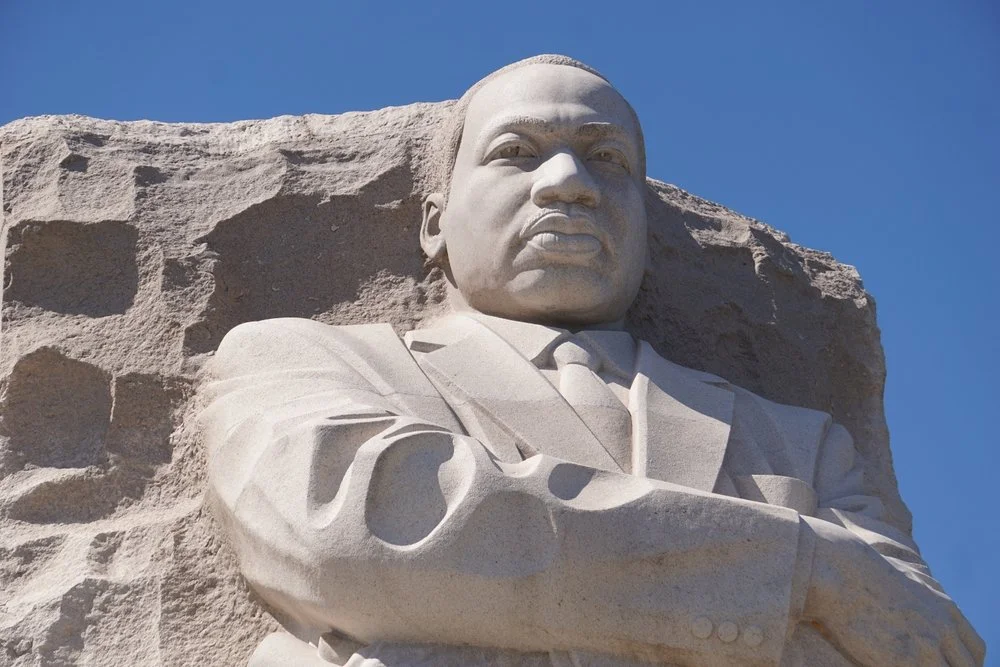
I was born in 1965. So, my initial understanding of the Civil Rights Movement — and the events leading up to the Selma marches and the signing of the Voting Rights Act — didn’t come from lived awareness. It came from what I heard and learned from my mother, other adults in our community, and in school.
Of course, I knew those events were significant and that they shaped my life. I also understood how directly they affected my mother.
In the 1960s, she was a professional musician who traveled across the country. She shared stories of arriving at hotels in the South only to be told that the room booked by her agent was suddenly no longer available — because the hotel hadn’t known, at the time of booking, that she was Black.
As I’ve gotten older, the book and oratory knowledge I absorbed about legalized racial segregation, discrimination, and disenfranchisement has deepened into a profound appreciation for those who paved the way for the rights and opportunities you and I have today.
Moral Courage, Not Optimism
History may not repeat itself, but it offers powerful clues about how to navigate present-day challenges and opportunities — especially when progress feels fragile.
I’ve been thinking about this this holiday weekend as we celebrate and reflect on the life and work of Dr. Martin Luther King, Jr.
Dr. King didn’t re-imagine America because it felt safe or realistic — he re-imagined it because the existing reality was morally unacceptable.
This re-imagining, which served as the foundation of the Civil Rights Movement, questioned deeply entrenched assumptions:
about who deserved dignity,
about whose voices mattered,
about what was “reasonable” or “too much to ask.”
Re-imagining is often the first disruption before any rebuilding can happen.
And as I’ve written previously, re-imagining isn’t about “better ideas.” It isn’t about optimism for optimism’s sake. It’s about questioning defaults that no longer align with our values — even when the alternative feels uncertain.
Dr. King’s life and legacy remind us that re-imagining is not an abstract exercise. Actually, it is often the first courageous step toward meaningful change.
The Patience to Re-Build
The MLK holiday weekend typically features tributes, suggested community projects, and political discussions — many of which reference Dr. King’s speeches “I Have a Dream” (1963) and “I’ve Been to the Mountaintop” (1968), along with the three Selma marches in 1965.
I’m referencing them, too, because, yes, they're well-known, but also to illustrate that the Civil Rights Movement wasn’t one march, one speech, or even one law. It was the result of years spent rebuilding systems, strategies, coalitions, and public consciousness — often through small, unglamorous steps. And often with the ultimate price being paid: one’s life.
Whatever you and I are re-building may impact lives, but it’s unlikely to come at the cost of them.
That’s what makes the courage required to lead — and to participate in — such a movement so extraordinary. The work was undertaken knowing it would take years, perhaps generations, to come to fruition — and that many could never see the results of their choices, efforts, or sacrifices.
Once again, I’m filled with deep appreciation for the people and events that shaped my life.
Assumptions, Tested
Last week, I wrote about how excited I was to experiment — how open I felt to what I might discover. This week, I found myself frustrated by one of my experiments. Something I thought would take me 5 minutes took me 5 hours, and had me questioning whether it was the best use of my time — even as I remain confident it’ll pay off in the long run.
At the root of all meaningful experimentation is curiosity. The process isn’t reckless. Rather, it's disciplined curiosity in action, in service to a larger vision — a willingness to ask, “What happens if I do X instead of Y?”
When I reflect on Dr. Martin Luther King, Jr.’s work and the Civil Rights Movement more broadly, the commitment to nonviolent resistance stands out as the epitome of strategic experimentation — one that required testing assumptions about power, response, and public perception.
It required accepting that not every action would work. That some would fail. That others would backfire. And trusting that all of it would still provide information.
In other words, experimentation was central — especially when outcomes were uncertain.
But, Here’s the Thing
Rightfully so, Dr. King is recognized as the leader of the Civil Rights Movement. But, he didn’t work alone or in isolation.
He and other movement leaders spent an enormous amount of time focusing on how to execute the rebuilding of systems, strategies, coalitions, and influence the public consciousness. And I suspect that for every choice made and action taken, they considered:
the context,
the timing,
the communities’ readiness, and
the consequences.
Because to do otherwise would have been dangerous.
In my eyes, this is further proof that how and when you act matters as much as what you do.
Human Work Is Never Linear
It also proves this: progress is rarely linear.
Re-imagining, re-building, and experimenting are human processes — not checklists.
In 2026, we are still being asked to re-imagine systems that fall short of our values. We are still re-building structures that were never designed to hold everyone with dignity. And we are still experimenting — testing assumptions, strategies, and approaches — in the face of uncertainty.
The lesson I take from Dr. King’s life and the Civil Rights Movement is not that progress is inevitable, but that it is intentional. It requires moral courage, patience measured in years, and disciplined curiosity — even when outcomes aren’t guaranteed.
That work is human. It is nonlinear. And it continues.
As someone whose life has been shaped by the sacrifices of others, I don’t take that work lightly. I take it seriously. And I take it forward — with gratitude for what came before, and care for what comes next.
About Jacquette

I love to ask questions and spark aha moments. I love to talk about why success with money is about more than just the numbers, and how the cultural impact on the intersection of money, business, and life matters–A LOT! And, I really hope I help people feel seen, heard, and not judged—especially since money is emotional and personal.